Cheapest Dental Schools: How to Compare Real Costs
If you are building a dental school list, cost probably matters. Four years of tuition and living expenses is a serious commitment. It is natural to search for the cheapest dental schools and start there.
The tricky part is that the "cheapest" school depends on who you are. Your state of residence, the length of each school's budget and the aid you receive can change the answer. In this guide, you will learn why public in-state programs often cost less, how to compare the full cost of attendance between schools, and how to balance cost with the things that make a program right for you. The figures below are averages. Always confirm current numbers with each school's financial aid office.
Why the cheapest dental schools are often public and in-state
The ADA's Health Policy Institute reports average first-year tuition and mandatory fees by school type. According to ADA data on dental education, in 2025–26 the averages were:
- $46,845 for residents at public programs
- $79,168 for non-residents at public programs
- $90,090 for residents at private programs
That gap explains a simple pattern. For many students, the lowest-cost option is a public dental school in their own state. The same public school can cost far more for an out-of-state student.
Residency rules vary. Some states define residency for tuition in strict ways, and some schools give admission preference to in-state applicants. Read each school's residency policy before you count on in-state rates.
Canadian students face a different system. Our guide to dental schools in Canada covers the accredited Canadian programs.
How to compare real dental school costs
Tuition is the headline number. The cost of attendance is the full picture. It is the budget a school uses to set your financial aid, and it usually includes fees, instruments, books, housing, food, transportation and health insurance.
Use these steps to compare schools fairly:
- Find each school's official cost of attendance. Save the link and the date you checked it.
- Match the time periods. Some budgets cover nine or ten months, others twelve. The University of Michigan's DDS cost of attendance, for example, uses a shorter budget period for the first year.
- Use the right residency column. Compare your own rate, resident or non-resident.
- Add instruments and fees. Dental instrument costs can be large, especially early in the program.
- Estimate all four years. Tuition often rises over time.
- Subtract scholarships and grants. A school with higher tuition and generous aid can end up costing less.
Keep everything in one spreadsheet. A clear comparison makes conversations with family and advisors much easier.
Watch for local living costs
Housing can change your total more than tuition differences. A lower-tuition school in an expensive city may cost about the same as a higher-tuition school in a more affordable area. Look at each school's housing estimate and talk with current students. Ask where most students live, whether they share housing and how they get to campus and clinic. Transportation and parking can add more than you expect in some cities.
Balance cost with fit
Cost is one factor among several. Before you finalize your list, also compare:
- Accreditation and outcomes: Confirm each program is accredited and ask how graduates prepare for licensure.
- Clinical training: Ask how students gain supervised patient experience.
- Support: Look at advising, tutoring and wellbeing resources.
- Admission fit: Apply where your academic profile and residency give you a fair chance.
Applying to schools that fit you well can save money too, since each application and interview has its own cost. Our guide to entering dental school explains the full process, and our pre-dental timeline helps you plan each step.
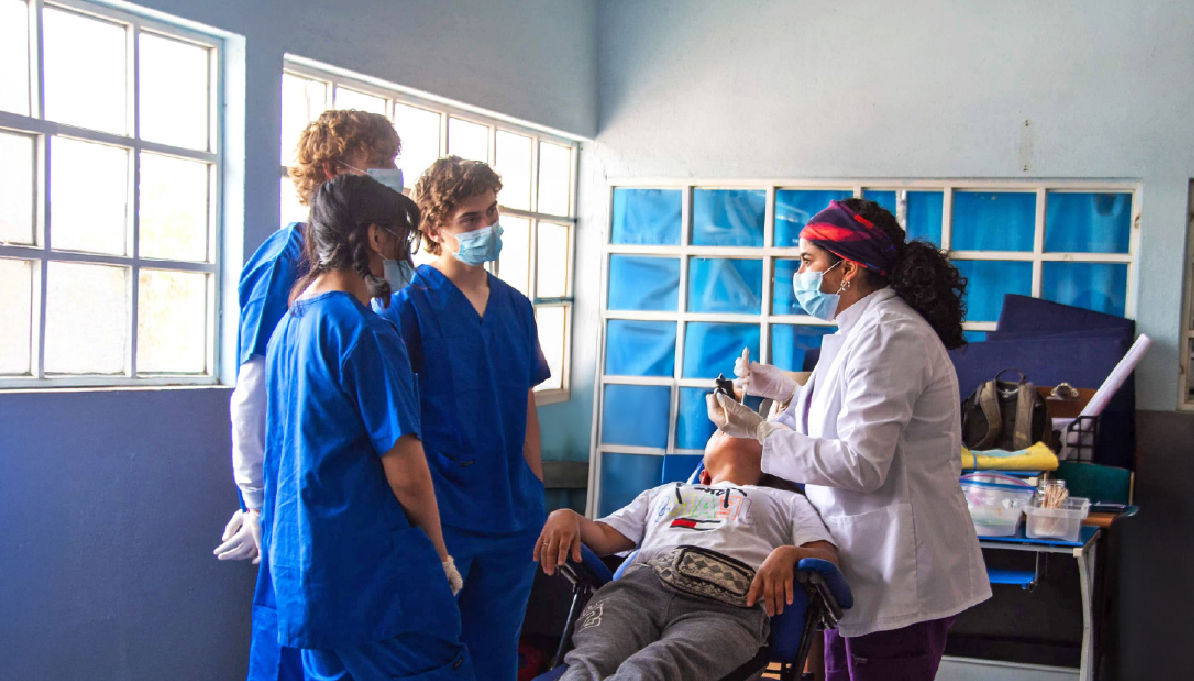
It also helps to confirm that dentistry is the right path before you commit to a large investment. A dental service learning trip is one way to see dental work in a community setting. On Smiles Movement trips, students shadow local dental professionals at mobile clinics and help with oral health education for children in partner communities.
Choose a school you can afford and grow in
The best value is a school that fits your budget and supports your growth. If you want to explore dentistry before you apply, Smiles Movement can help. Fill out the form or download our brochure to get more information about upcoming programs and trip dates.
Frequently asked questions about the cheapest dental schools
Which dental schools are the cheapest?
For many students, public schools in their own state cost the least. ADA data for 2025–26 shows an average first-year cost of $46,845 for residents at public programs.
Is tuition the best way to compare dental schools?
No. Compare the full cost of attendance, matched to the same time period and residency status, and subtract the aid each school offers.
Can out-of-state students get in-state tuition?
Sometimes, depending on the state's residency rules. Each school explains its residency policy on its admissions or financial aid pages.