

Dental Anesthesiologist: Role, Training and Path
For some patients, a regular dental visit is not possible while they are fully awake. Young children, people with severe anxiety, and patients with certain medical or developmental conditions may need sedation or general anesthesia. That is where a dental anesthesiologist comes in.
A dental anesthesiologist is a dentist with advanced training in anesthesia and pain control. In this guide, you will learn what a dental anesthesiologist does and where they work. You will also see how dental anesthesiology became a recognized specialty and what the training path looks like. Finally, you will find practical ways to explore this career while you are still a pre-dental student.
What does a dental anesthesiologist do?
Dental anesthesiologists manage pain, anxiety, and consciousness during dental care. They provide local anesthesia, sedation, and general anesthesia. They also monitor patients closely before, during, and after treatment. This includes checking breathing, heart rate, and oxygen levels.
Their work lets another dentist focus on the procedure while they focus on the patient's safety and comfort.
Who they help
Dental anesthesiologists often care for:
- Young children who need extensive treatment.
- Patients with special health care needs, including some developmental disabilities.
- People with severe dental anxiety.
- Patients with complex medical histories who need careful monitoring.
Our article on calming nervous dental patients shows why comfort matters so much in dentistry.
Where they work
Some dental anesthesiologists work in hospitals or surgery centers. Others travel to dental offices with their own equipment. Many also teach in dental schools or residency programs.
A recognized dental specialty
Dental anesthesiology became a recognized dental specialty in 2019. The National Commission on Recognition of Dental Specialties and Certifying Boards lists it among the specialties dentists can pursue.
Recognition means the field has its own accredited education standards and certifying board. It also reflects growing awareness that safe anesthesia care improves access to dentistry for many patients.
How to become a dental anesthesiologist
The path takes many years of focused training.
- Earn a bachelor's degree. Complete pre-dental prerequisites in biology, chemistry, and physics.
- Graduate from dental school. Earn a DDS or DMD from an accredited program.
- Complete a dental anesthesiology residency. Accredited programs usually last three years. Residents train in hospital operating rooms and dental clinics.
- Seek board certification. The American Dental Board of Anesthesiology certifies qualified specialists.
- Meet state permit rules. States regulate who can provide sedation and general anesthesia, so each state's dental board sets permit requirements.
You can find accredited programs through the Commission on Dental Accreditation.
Skills that help in this field
This specialty suits people who stay calm under pressure. Dental anesthesiologists must watch vital signs, react quickly, and communicate clearly with the care team. Strong knowledge of physiology and pharmacology is essential.
Empathy matters too. Many patients arrive frightened. A calm, kind explanation can make a big difference. Families also need clear information. Parents of young patients often have questions about safety and recovery. A good dental anesthesiologist takes time to answer them in plain language.
Exploring dental anesthesiology before dental school
You can start building a foundation now.
Take physiology and pharmacology seriously. These subjects are the core of anesthesia practice.
Shadow in different settings. If possible, observe pediatric dentists or oral surgeons, who often work with sedation. Ask how they keep patients safe.
Spend time with diverse patients. Volunteering with children or people with disabilities builds communication skills.
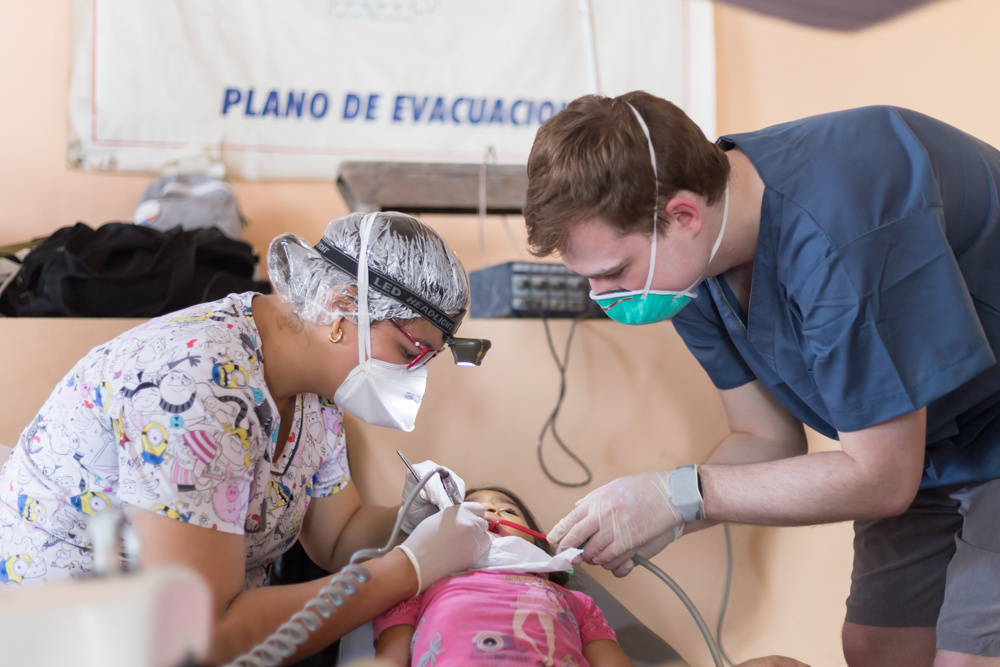
See how access to care differs. Many communities lack specialists entirely. A dental service learning trip can help you understand these gaps. On Smiles Movement trips, students shadow local dental professionals at mobile clinics and help with oral health education for children in partner communities. To compare this career with other fields, read our dental specialties guide.
Take the next step in exploring dentistry
A dental anesthesiologist helps patients receive care they might otherwise avoid or be unable to get. If you are drawn to science, safety, and patient comfort, this specialty may be worth exploring. Start by seeing dentistry in many settings and talking with professionals about their paths. Smiles Movement can help you observe care in communities with limited access. Fill out the form or download our brochure to get more information about upcoming programs and trip dates.
Frequently asked questions about becoming a dental anesthesiologist
Is a dental anesthesiologist a dentist?
Yes. A dental anesthesiologist first earns a DDS or DMD. They then complete a residency in dental anesthesiology and may seek board certification.
How long is dental anesthesiology residency?
Accredited dental anesthesiology residencies usually last three years. Residents train in hospital and clinic settings.
When did dental anesthesiology become a specialty?
Dental anesthesiology was recognized as a dental specialty in 2019. It is listed by the National Commission on Recognition of Dental Specialties and Certifying Boards.