

Dental School Curriculum: What You Learn Each Year
When you picture dental school, you might imagine patients and clinic chairs right away. In reality, the first years look a lot like intense science classes mixed with hands-on lab work.
Understanding the dental school curriculum before you apply can help you prepare. It can also help you decide if this path fits your interests. In this guide, you will learn what you learn in dental school across the four years. You will see how classroom science connects to simulation labs and then to patient care. You will also get practical ways to start building the right habits now. Keep in mind that every school designs its own program. The pattern below is common, but the details change from school to school.
How the dental school curriculum is usually organized
Most dental programs in the United States last four years and lead to a DDS or DMD degree. The two degrees are equivalent. The years often move from foundation to practice.
Biomedical sciences
Early courses cover how the body works. Students study anatomy, physiology, biochemistry, microbiology, pharmacology and pathology. Many schools teach these topics in blocks organized by body system. Dental students often learn head and neck anatomy in great detail, since it shapes their daily work.
Dental sciences
Alongside the core sciences, students learn dental anatomy, oral histology and dental materials. Dental anatomy is the study of each tooth's shape and function. Oral histology looks at tissues under the microscope. Dental materials covers what fillings, crowns and other restorations are made of.
Preclinical simulation
Before treating patients, students practice in a simulation lab. They work on mannequin heads with model teeth. This is where they learn to hold instruments, prepare a tooth and place a restoration. Faculty check each step closely. Students build manual skill through repetition.
What you learn in dental school during clinical years
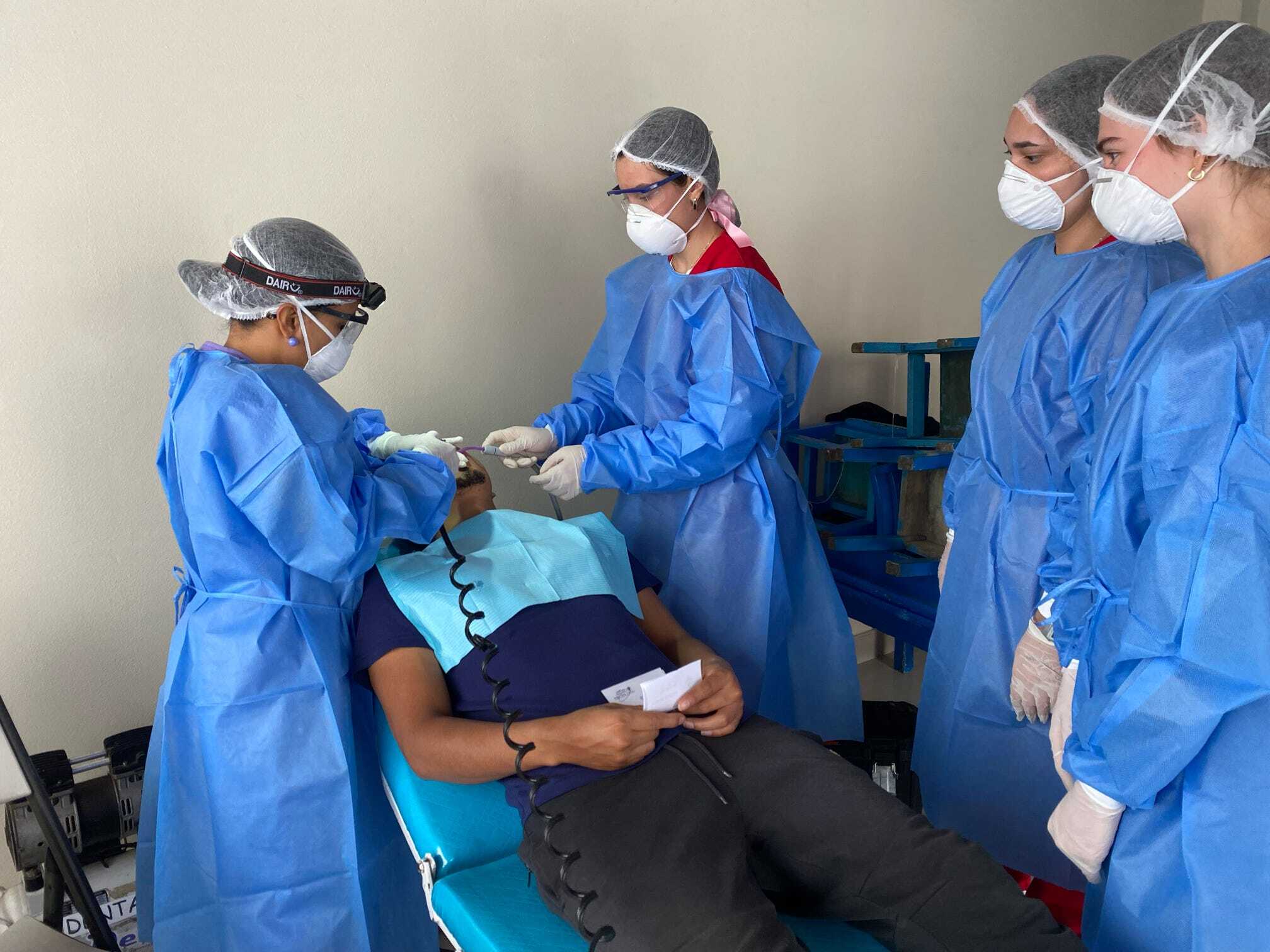
In the later years, students move into the school's clinic. They treat patients under the direct supervision of licensed faculty. Clinical training often covers several areas.
- Restorative dentistry. Fillings, crowns and other repairs.
- Periodontics. Care of the gums and supporting tissues.
- Endodontics. Root canal treatment.
- Oral surgery. Extractions and minor surgical care.
- Pediatric dentistry. Care for children.
- Prosthodontics. Dentures, bridges and other replacements.
Many schools also include community rotations. Students may spend time at public health clinics or rural sites. These rotations show how access to care changes from one place to another.
Students also prepare for licensure. Most take the Integrated National Board Dental Examination, known as the INBDE. You can learn about it from the Joint Commission on National Dental Examinations. States set their own licensing rules, so requirements vary.
Beyond clinical skill, the curriculum covers ethics, communication, practice management and public health. These courses help students understand patients as whole people. For a wider look at the path, read our guide to entering dental school.
How to prepare before your first semester
You do not need to learn dental school content in advance. You can build habits that make the transition easier.
- Strengthen your science base. Take biology, chemistry and biochemistry seriously. Many dental courses build on them.
- Practice steady study routines. Dental school moves fast. Learning to review a little every day helps.
- Work with your hands. Drawing, sculpting, playing an instrument or building models can support fine motor control.
- Observe real dental care. Shadowing shows you how clinic work looks before you start it yourself.
- Learn about community health. Seeing care in different settings gives your studies more context.
A dental service learning trip can support the last two steps. On Smiles Movement trips, students shadow local dental professionals at mobile clinics and help with oral health education for children in partner communities. Many students find this helps them connect classroom ideas to real patients. Our article on experiential learning in dental education explains why that link matters.
Get ready for the path ahead
The dental school curriculum asks a lot, from science classes to patient care. Knowing what to expect helps you plan your college years with purpose. Start with strong study habits and real exposure to dentistry. If you want to see dental care in community settings before you apply, Smiles Movement can help. Fill out the form or download our brochure to get more information about upcoming programs and trip dates.
Frequently asked questions about dental school curriculum
How many years is the dental school curriculum?
Most DDS and DMD programs in the United States take four years. Some students then complete a residency for further training.
When do dental students start seeing patients?
It depends on the school. Many students begin treating patients in the third year, after preclinical lab training. Some schools introduce patient contact earlier.
Is the dental school curriculum similar to medical school?
The early science courses overlap in many ways. Dental school adds focused training in oral health, dental materials and hands-on procedures from the start.