

How to Study for Organic Chemistry as a Pre-Dental Student
Organic chemistry has a reputation. Many pre-dental students hear about it long before they take it. It can feel like a gatekeeper course, with new ways of thinking, new vocabulary and a fast pace.
The good news is that organic chemistry is a skill you can build. In this guide, you will learn how to study for organic chemistry in a way that works, from understanding mechanisms to practicing problems every week. You will also see why the course matters for dental school, and how strong habits now can help you prepare for the Dental Admission Test later. These tips are general study strategies. Your professor's syllabus and office hours remain your best guide for each course.
Why organic chemistry matters for pre-dental students
Organic chemistry is a standard dental school prerequisite. ADEA's prerequisite overview lists it alongside biology, general chemistry and physics, usually with a lab.
It also appears on the DAT. The American Dental Association includes organic chemistry in the Survey of the Natural Sciences section, with biology and general chemistry. The ADA also updated its organic chemistry test specifications for students testing from May 2026 onward. Learning the material well now saves time later. Our guide to the Dental Admission Test explains how to plan your test.
How to study for organic chemistry
Focus on the core ideas
Organic chemistry builds on a few core ideas, such as how electrons move and why some molecules react. If you understand these ideas, many reactions start to make sense. Memorizing reactions one by one usually breaks down when an exam question looks different.
Learn mechanisms step by step
A mechanism shows how a reaction happens, one step at a time. Draw each step by hand. Use arrows to show where electrons move. Then try to explain the mechanism out loud without your notes.
Practice problems every day
Organic chemistry rewards practice. Work through problems from your textbook and problem sets. Mix older topics with new ones so earlier material stays fresh. When you get a problem wrong, write down why.
Use models and drawings
Molecules are three-dimensional. A molecular model kit can help you see shapes and angles that are hard to picture on paper. This also builds the spatial thinking that helps in dentistry.
Ask for help early
Go to office hours early in the term, starting in the first few weeks. Join a study group or tutoring session. Explaining a concept to a classmate is one of the best ways to check your understanding.
A sample weekly study plan
Here is one way to organize a typical week:
- After each lecture: Spend 20 to 30 minutes reviewing notes and redrawing key structures.
- Midweek: Work through a problem set and mark questions you could not solve.
- Office hours: Bring your marked questions.
- Weekend: Do a mixed review of the past two to three weeks of material.
- Before each exam: Take a timed practice exam and review every mistake.
Adjust the plan to your schedule. Consistency matters more than long cram sessions. If you work or commute, shorter daily sessions can fit better than long weekend blocks. The goal is regular contact with the material so each new topic builds on the last.
Take care of yourself
Hard courses go better with rest. Protect your sleep, especially before exams. Take short breaks during long study sessions. If you feel stuck, talk with your advisor or campus learning center.
If you are still planning your course sequence, our pre-dental timeline shows where organic chemistry usually fits, and our guide to the best pre-dental majors explains how to fit prerequisites into any field.
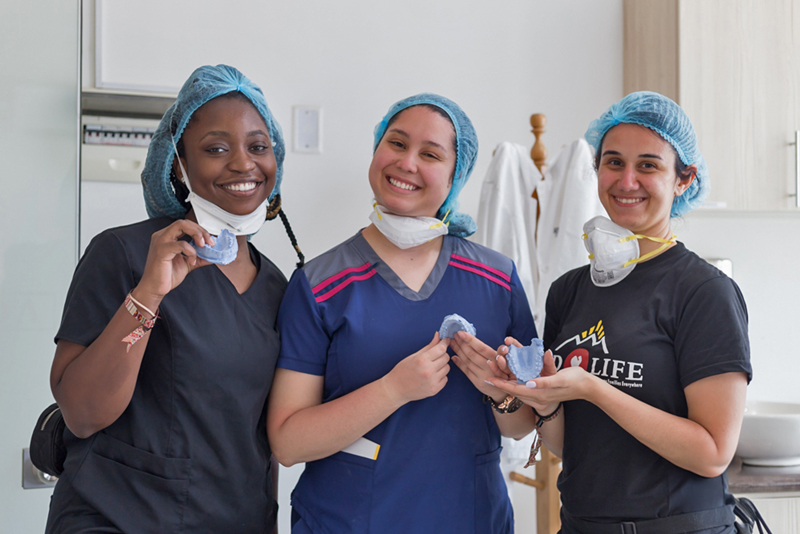
Breaks from coursework can also remind you why you are studying. A dental service learning trip is one way to see dentistry in action during a school break. On Smiles Movement trips, students shadow local dental professionals at mobile clinics and help with oral health education for children in partner communities.
Build habits that last
Organic chemistry is challenging, and steady habits make it manageable. The same skills will help you on the DAT and in dental school. If you want to see dental work up close during your breaks, Smiles Movement can help. Fill out the form or download our brochure to get more information about upcoming programs and trip dates.
Frequently asked questions about studying organic chemistry
How many hours should I study for organic chemistry?
It depends on the course and your background. Many students plan regular study time several days a week. Your professor or advisor can help you set a realistic target.
Is organic chemistry on the DAT?
Yes. The ADA includes organic chemistry in the Survey of the Natural Sciences section of the DAT, along with biology and general chemistry.
What is the best way to learn reaction mechanisms?
Draw each step by hand, show electron movement with arrows and explain the mechanism out loud. Then practice with new problems.