

INBDE Guide: What Future Dental Students Should Know
If you are planning a career in dentistry, you will hear about board exams long before you take one. The most important one has a short name: the INBDE.
The INBDE stands for the Integrated National Board Dental Examination. Almost every future dentist in the United States takes it during dental school. In this guide, you will learn what the INBDE is, what it tests, and when students usually sit for it. You will also see how the exam fits into getting a dental license. Finally, you will find simple habits you can build as a pre-dental student. These habits can make board preparation feel less overwhelming later on.
What is the INBDE?
The INBDE is a national exam created by the Joint Commission on National Dental Examinations (JCNDE). It helps state dental boards decide whether a candidate has the knowledge needed to practice safely.
The exam replaced the older two-part National Board Dental Examination. The older format split basic science and clinical topics into separate tests. The INBDE combines them. Questions ask you to connect science with patient care in the same item.
Who takes the INBDE
Dental students in accredited DDS and DMD programs take the INBDE. Some internationally trained dentists also take it as part of their path to a U.S. license. Each dental school sets its own policy on when students become eligible.
What the INBDE covers
The INBDE tests what the JCNDE calls foundation knowledge and clinical content. Foundation knowledge includes areas such as anatomy, physiology, microbiology, and pharmacology. Clinical content covers topics such as diagnosis, treatment planning, oral health management, and practice and profession.
Many questions are built around patient cases. A case might include a health history, a photo, or a radiograph. You then answer questions about that patient. The goal is to test clinical judgment along with knowledge.
The exam has 500 multiple-choice items and is given over two days: a long first day and a shorter second day. Formats and policies can change, so always check the current INBDE candidate guide on the JCNDE website.
When dental students take the INBDE
Most students take the INBDE in their third or fourth year of dental school. By then, they have finished most of their science courses and have spent time treating patients in the school clinic.
Here is how the INBDE fits into the longer path to practice:
- Finish dental school. You earn a DDS or DMD from an accredited program.
- Pass the INBDE. This shows you have the knowledge base for safe practice.
- Complete a clinical exam or residency. Requirements vary by state. Some states accept a postgraduate year instead of a clinical exam.
- Apply for a state license. Each state dental board sets its own rules.
Because each state is different, students usually check their target state's requirements early. You can read more about the full path in our guide to entering dental school.
Results and retakes
The INBDE is scored as pass or fail. If a candidate does not pass, JCNDE rules describe when they can test again. Dental schools also have their own academic policies. Your school will explain both when the time comes.
How pre-dental students can prepare for the INBDE early
You do not need to study for the INBDE in college. You can still build habits that will help when board prep begins.
Learn science for understanding. The INBDE links science to patient care. When you study biology or biochemistry, ask how each idea might affect a patient. This habit makes integrated questions feel more natural later.
Practice case-based thinking. Pay attention to how professionals reason through a problem. Shadowing is a good place to see this. Notice how a dentist reviews a health history before starting treatment.
Get comfortable with dental language. Terms like "caries," "periodontal," and "occlusion" appear constantly. Learning them early lowers your stress in dental school.
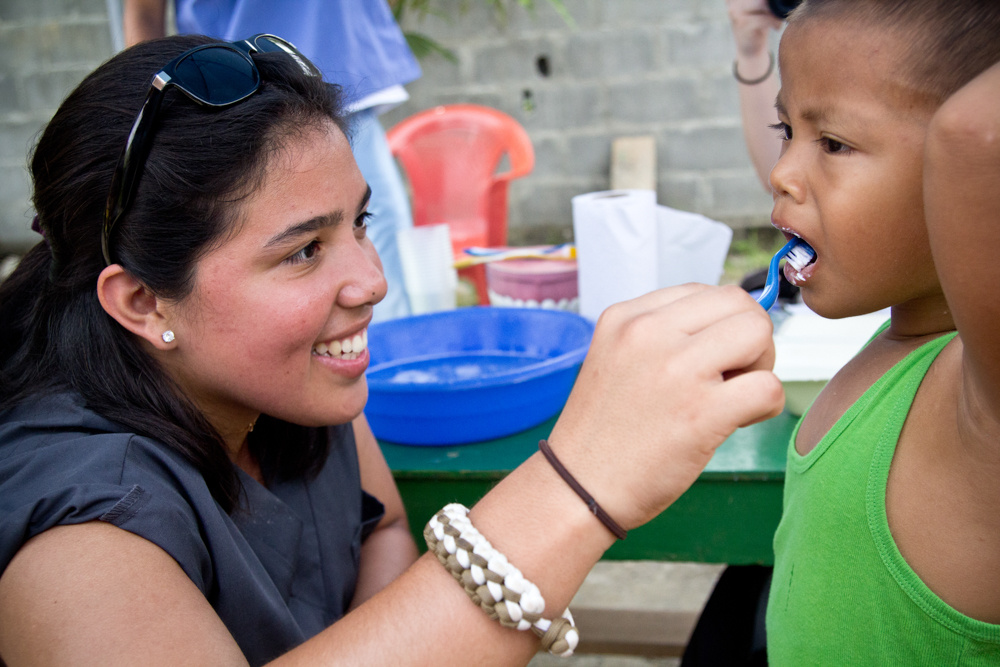
See how care works in different settings. Clinical questions often touch on access to care and community health. Watching care delivered outside a private office can give you useful context. A dental service learning trip is one way to do this. On Smiles Movement trips, students shadow local dental professionals at mobile clinics and help with oral health education for children in partner communities. Our article on the most common dental procedures is another good starting point.
Start building your foundation now
The INBDE is a milestone that comes years after you apply to dental school. The habits that support it can start today. Study science with patients in mind. Watch how dentists make decisions. Look for experiences that show you how care works in real communities. If you want to observe dentistry in a new setting before you apply, Smiles Movement can help. Fill out the form or download our brochure to get more information about upcoming programs and trip dates.
Frequently asked questions about the INBDE
What does INBDE stand for?
INBDE stands for Integrated National Board Dental Examination. The Joint Commission on National Dental Examinations develops it. State dental boards use the results as part of the licensing process.
When do dental students take the INBDE?
Most students take it in their third or fourth year of dental school. Each school sets its own eligibility rules. Your school will tell you when you can register.
Is the INBDE pass or fail?
Yes. The INBDE reports results as pass or fail. Check the current JCNDE candidate guide for the latest details on scoring and retakes.