

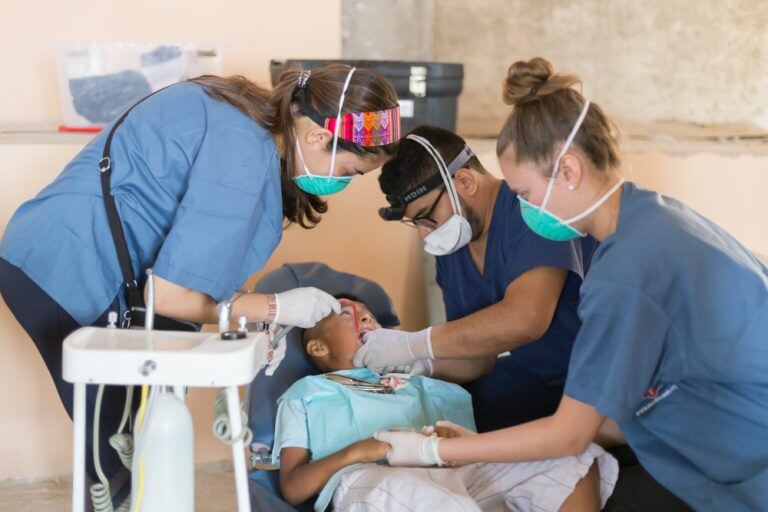
Dental and Medical Volunteer Abroad: Student's Ethics
If you are a pre-health student, a program abroad can sound like the perfect next step. You get to travel, learn about global health and see care in a new setting. It can also be confusing. Program websites use very different words to describe what volunteers do.
This guide helps you sort it out. If you are researching ways to medical volunteer abroad, you will learn what students without a license can and cannot do, which red flags suggest a program is not responsible, and which questions to ask before you apply. You will also see how dental programs fit into the same picture. By the end, you will be able to compare options with clear criteria. That makes it easier to pick a program that respects patients and supports your learning.
What students can do when they medical volunteer abroad
Students without a license are learners. The ethical standard abroad is the same as at home. You should not do anything abroad that you would not be allowed to do in your own country.
That still leaves plenty of meaningful work. Each role below keeps patients safe and keeps you learning. Common roles for students include:
- Shadowing. You observe licensed local professionals as they assess and treat patients.
- Health education. You help with lessons on hygiene, nutrition or oral health, often for children.
- Logistics. You help with patient flow, registration or supply organization under local direction.
- Community projects. Some programs include projects such as improving homes or schools.
These roles help you understand health systems, culture and patient care. They also give you real experiences to reflect on in interviews.
What students should not do
You should not diagnose, give injections, prescribe or carry out any treatment. In dentistry, that includes extractions, fillings and cleanings. A responsible program will say this clearly before you arrive. Our article on mission trips vs. service trips explains why this boundary matters.
Red flags to watch for
Some programs blur the line between learning and practicing. Watch for these warning signs:
- Hands-on promises. Phrases like "hands-on treatment" or "gain clinical skills" for students without a license.
- No local professionals. If visiting volunteers seem to run care, ask who is actually responsible.
- One-time care with no follow-up. Patients need ongoing care after volunteers leave.
- Vague safety plans. You should know who leads your group and what happens in an emergency.
- Images that exploit. Photos that present community members as helpless are a sign of poor values.
If you notice one of these, ask questions before you commit. The term voluntourism describes trips where the traveler's experience comes before the community's needs. Learning to spot it will help you choose well.
Questions to ask before you apply
Use these questions to compare programs side by side:
- Who provides care, and are they licensed in the host country?
- What exactly will students do each day?
- How does the program work with local partners and follow up with patients?
- What training do students get before the trip?
- Who leads the group, and what is the emergency plan?
- How is the program fee used?
Good programs answer clearly and in writing. They may also share sample itineraries.
Where dental programs fit
Dental service learning follows the same principles. On a Smiles Movement dental service learning trip, students shadow local dental professionals at mobile clinics and help with oral health education for children in partner communities. Trips run in Peru and Ecuador. The focus is on learning, reflection and support for care that continues year-round. To compare options in more detail, read our guide on ethical dental volunteer programs.
Choose a program you can explain with pride
The best experience abroad is one you can describe honestly in an interview. You will be able to say what you saw, what you did and what you learned. Start with clear limits on your role. Ask direct questions. Choose a program that puts local partners first. If you are curious about dental programs that follow these principles, Smiles Movement can share details. Fill out the form or download our brochure to get more information about upcoming programs and trip dates.
Frequently asked questions about medical volunteer abroad programs
Can pre-med or pre-dental students treat patients abroad?
No. Students without a license should not diagnose or treat patients anywhere. Ethical programs limit students to observation, education and support tasks under local professionals.
How do I know if a volunteer abroad program is ethical?
Look for licensed local providers, clear student roles, follow-up care and transparent fees. Ask questions before you apply. A good program answers in writing.
Do dental schools value volunteering abroad?
Dental schools look at what you learned and how you reflect on it. Experience abroad can add perspective. It works best alongside local service and shadowing at home.