

Oral Health Education: Why It Matters and How It Works
A toothbrush costs very little. Knowing how and when to use it is worth a lot. That knowledge does not always reach every family, especially where dentists are hard to find.
This article explains oral health education and why it matters. You will learn what it includes, why it plays a key role in communities with limited dental care, and which teaching methods tend to work best. You will also see how pre-dental students can support oral health education programs in a respectful way. If you are exploring dentistry, this topic connects directly to the prevention work you will study in dental school. It also shows a side of the profession that happens outside the dental chair: listening to families and sharing practical habits that protect teeth for life.
What oral health education includes
Oral health education teaches people how to care for their teeth and gums. It also explains why that care matters for overall health.
Common topics include:
- Brushing and cleaning between teeth. Technique, timing and the use of fluoride toothpaste.
- Diet. How often sugary foods and drinks are eaten, and healthier swaps.
- Early signs of problems. Bleeding gums, tooth pain or white spots on teeth.
- When to seek care. How regular checkups can catch problems early.
- Caring for children's teeth. Guidance for parents and caregivers.
Good education matches the audience. A lesson for preschoolers looks very different from a talk with parents or older adults. Children respond to songs, games and colorful models. Adults often want quick, practical answers to questions about cost, pain or their children's teeth. Older adults may need advice on dentures or dry mouth. Matching the message to the listener makes it far more likely to stick.
Why oral health education matters in underserved communities
The World Health Organization describes oral diseases as among the most common noncommunicable diseases worldwide. Many of these conditions are preventable.
In places where dental care is far away or expensive, prevention becomes even more important. Families may only see a dentist when pain becomes severe. Education helps them take action earlier, at home.
Oral health is also linked to general health, school attendance and quality of life. Our article on oral health as public health explores this connection in more detail.
Health literacy is part of the picture
Oral health literacy is a person's ability to find, understand and use health information. Clear education builds that skill. Learn more in our guide to oral health literacy.
How effective oral health education programs work
Research and experience point to a few common features of strong programs.
Keep messages simple and practical
People remember one or two clear actions better than a long list. "Brush twice a day with fluoride toothpaste" is easier to act on than a lecture on bacteria.
Show, then practice
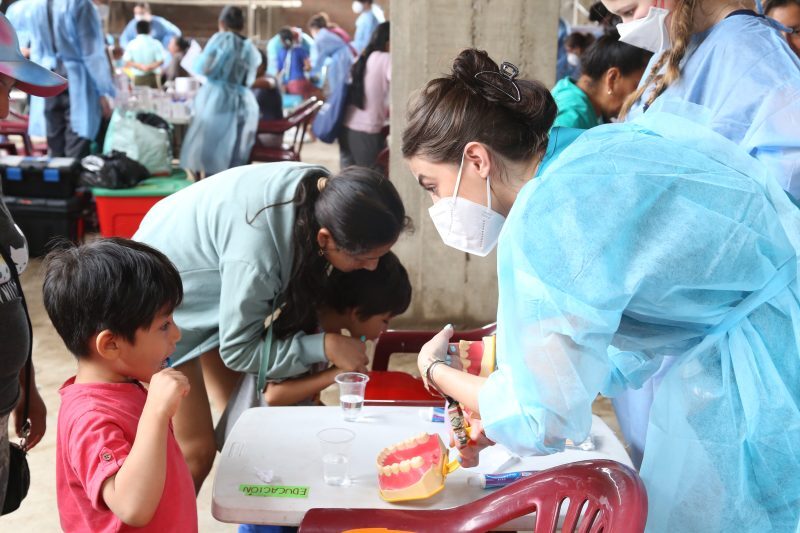
Demonstrations work well. A large tooth model and a toothbrush can teach technique in minutes. Letting children practice turns the lesson into a skill.
Work with local partners
Local health workers, teachers and community leaders understand the culture and language. They know what families need and what resources exist. Programs led with local partners are more likely to last.
Repeat over time
One lesson is a start. Habits grow when messages are repeated in schools, clinics and homes. School programs are a strong setting for this. See how school oral health programs work in Peru and Ecuador.
How students can help
Students can support education without needing clinical skills. They can prepare visual materials, lead games for children and assist local professionals during sessions. On a dental service learning trip with Smiles Movement, students shadow local dental professionals at mobile clinics. They also help with oral health education for children in partner communities. Students observe and support. They do not perform dental procedures.
Support oral health education where it is needed
Oral health education gives families practical tools to prevent disease. It works best when it is simple, hands-on, repeated and guided by local partners. If you want to see this work up close while exploring a career in dentistry, Smiles Movement can help. Fill out the form or download our brochure to get more information about upcoming programs and trip dates.
Frequently asked questions about oral health education
What is the main goal of oral health education?
The main goal is to help people prevent dental disease. It teaches daily habits like brushing with fluoride toothpaste and limiting sugary snacks. It also encourages people to seek care early.
Who provides oral health education?
Dentists, dental hygienists, teachers and community health workers often provide it. Trained volunteers and students can support these professionals. Local partners help make sure lessons fit the community.
Can pre-dental students help with oral health education?
Yes. Pre-dental students can help prepare materials and lead simple activities under the guidance of local professionals. This builds communication skills. It also gives students a clearer view of preventive dentistry.