

Periodontist vs Dentist: How Their Work Differs
Most people think of dentistry as cavities and cleanings. Underneath every healthy tooth, though, is a foundation of gums and bone. When that foundation gets sick, a different kind of expert often steps in.
If you are exploring dental careers, the periodontist vs dentist question is a useful one to understand. Both professionals care for the mouth, and both start with the same dental degree. Their daily work, training and patients can look quite different. In this guide, you will learn what a general dentist does, what a periodontist focuses on, how long the extra training takes, and how to explore both paths before you choose. You will also find a few questions to help you notice which kind of work fits you best.
Periodontist vs dentist: what each one does
General dentists care for the overall health of the teeth, gums and mouth. They examine patients, read x-rays, fill cavities, repair or remove damaged teeth and teach patients how to prevent problems. They also watch for early signs of gum disease and refer patients when a case needs a specialist.
Periodontists are dental specialists. The American Academy of Periodontology describes them as specialists in the prevention, diagnosis and treatment of diseases affecting the gums, and in the placement of dental implants. The AAP also calls periodontists dentistry's experts in treating oral inflammation.
The ADA's MouthHealthy site explains that periodontists treat cases ranging from mild gingivitis to more severe periodontitis. Gingivitis is early gum inflammation. Periodontitis is a more serious stage that can damage the bone that holds teeth in place.
How the two roles work together
Dentists and periodontists often share patients. A general dentist may spot bleeding gums or bone loss on an x-ray and refer the patient. The periodontist then plans treatment and works with the general dentist on ongoing care. Many patients return to their general dentist for routine visits once their gum health is stable.
To see how periodontics fits among all the specialties, read our guide to dental specialties.
How periodontists train after dental school
The path starts the same way for both careers:
- Complete a bachelor's degree with dental school prerequisites.
- Take the Dental Admission Test and apply to dental school.
- Finish dental school and earn a DDS or DMD.
Future periodontists then add a residency. Both the AAP and the ADA state that periodontists complete three additional years of training after dental school. The American Board of Periodontology notes that residency combines clinical and classroom study, and that graduates may then seek board certification through a multi-part exam.
That extra time affects cost and the age when you start practicing independently. It also gives you deep expertise in one area of care. For a year-by-year view of the early steps, see our pre-dental timeline.
What daily work looks like
A general dentist's schedule usually mixes exams, fillings, crowns and preventive visits for patients of all ages. A periodontist's schedule tends to focus on gum evaluations, deep cleanings below the gumline, gum surgery and dental implants. Periodontists also spend time explaining long-term care, because gum disease often needs ongoing management.
Which path fits you better?
Ask yourself these questions:
- Do you enjoy variety or depth? General dentists handle many kinds of problems. Periodontists focus closely on one area.
- How do you feel about surgery? Periodontal care includes surgical procedures and implant placement.
- How long do you want to train? Specialization adds three years after dental school.
- Do you like long-term patient relationships? Gum disease care often continues over years, so periodontists may follow patients for a long time.
You do not need to choose a specialty now. Most students decide during or after dental school, once they have seen several areas of care.
Explore both paths early
Shadowing is a practical way to compare careers. Ask to observe a general dentist and a periodontist for a day each. Notice the kinds of patients, the pace and how each professional explains treatment. You can also compare roles across the dental team in our guide to dentistry vs dental hygiene.
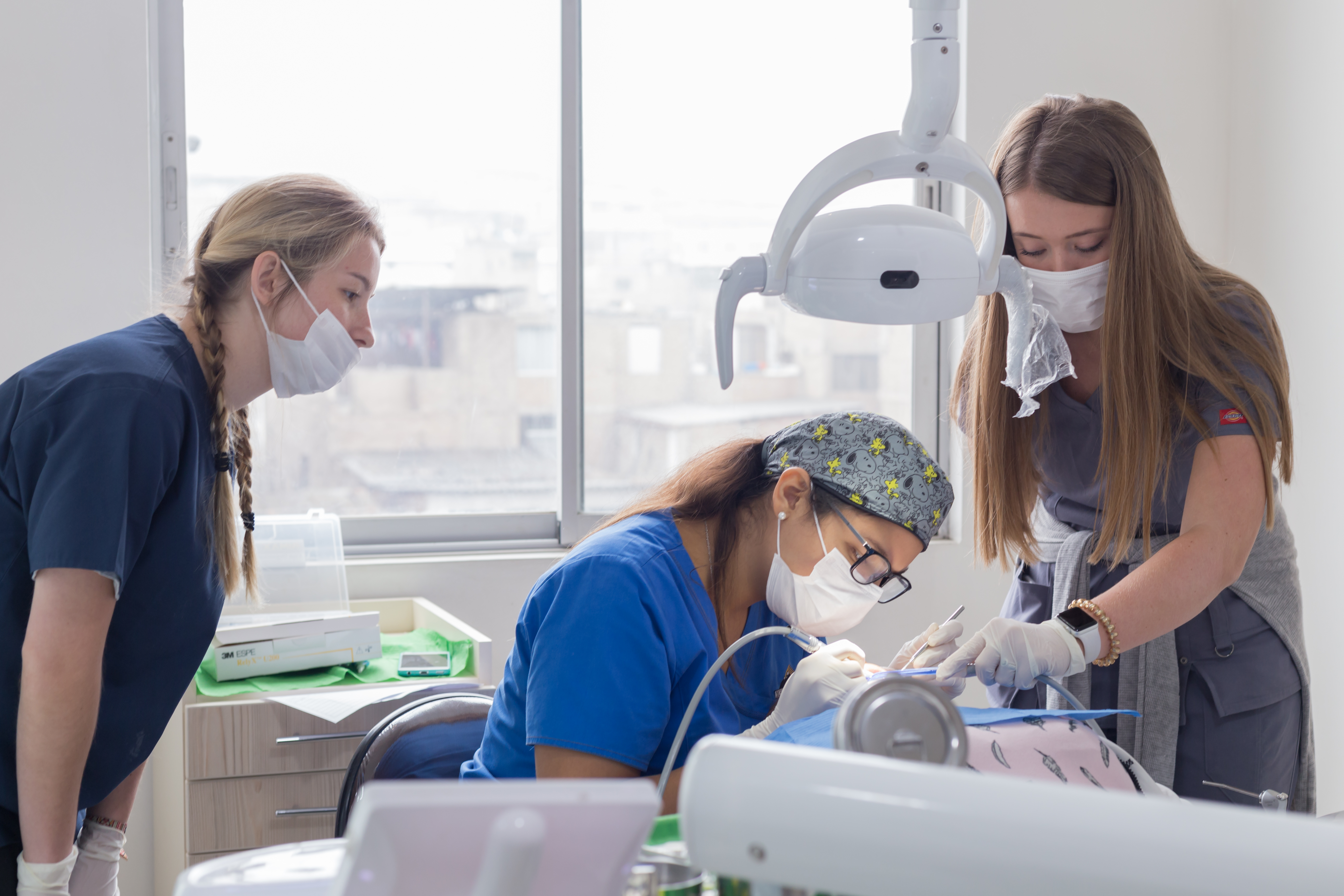
A dental service learning trip is another way to see oral health care up close. On Smiles Movement trips, students shadow local dental professionals at mobile clinics and help with oral health education for children in partner communities. Seeing how gum health and prevention connect in community settings can help you notice which work draws you in.
Start exploring dental careers
Every periodontist starts as a dentist, and every dentist starts by exploring the field. If you want to learn alongside dental professionals and partner communities, Smiles Movement can help. Fill out the form or download our brochure to get more information about upcoming programs and trip dates.
Frequently asked questions about periodontist vs dentist
Is a periodontist a dentist?
Yes. Periodontists complete dental school first. They then finish three additional years of specialty training focused on the gums, supporting bone and dental implants.
When does a patient see a periodontist instead of a dentist?
Patients often see a periodontist when gum disease is advanced or complex, or when they need certain implant or gum procedures. A general dentist usually makes the referral.
How long does it take to become a periodontist?
Most periodontists complete a bachelor's degree, about four years of dental school and a three-year periodontics residency.