

Dental Hygiene Volunteer Opportunities to Explore
Dental hygienists spend much of their day teaching. They show patients how to brush, floss and protect their teeth between visits. If that part of the job interests you, volunteering is a smart way to see it in action.
This guide covers dental hygiene volunteer opportunities for students who are exploring the career or already in a hygiene program. You will learn which roles fit your training level, where to look and how to choose programs that respect patients and communities. You will also see how to reflect on each experience. That reflection helps when you apply to a hygiene program or talk with employers later. Volunteering can also help you decide whether hygiene, dentistry or another oral health role fits you best.
Dental hygiene volunteer opportunities by training level
What you can do depends on your education and your state's rules. Hygiene is a licensed profession. Licensed hygienists can provide care within their scope of practice. Students and prospective students take on supporting roles. Those roles still teach a lot. You see how hygienists talk with patients, organize their day and work with the rest of the dental team.
If you are exploring the career
- Observe in a dental office. Ask a local practice if you can watch a hygienist for a day.
- Help at health fairs. Hand out supplies and share simple brushing tips.
- Support school programs. Help run oral health lessons for children under supervision.
- Volunteer at a community clinic. Many need help with check-in, supplies and organization.
If you are in a hygiene program
Your program may offer community rotations or outreach events. These let you practice skills under faculty supervision. Ask your instructors about local partners, such as school sealant programs or clinics for older adults.
If you are licensed
Licensed hygienists can often volunteer in free clinics and community events. Rules vary by state, so check with your licensing board and the organizing group.
Where to find dental hygiene volunteering
Start with organizations that already run oral health outreach. They have systems for training and supervising volunteers, which makes your first experience easier and safer for everyone involved.
- Community health centers. Many have dental departments that serve families with limited access to care.
- Free clinics. Some hold dental days staffed by volunteers.
- School-based programs. Programs that bring education or prevention into schools often need help.
- Give Kids A Smile events. The ADA Foundation's Give Kids A Smile program organizes local events with dental volunteers.
- Professional groups. Local hygiene associations often share volunteer openings.
Learning in community settings abroad
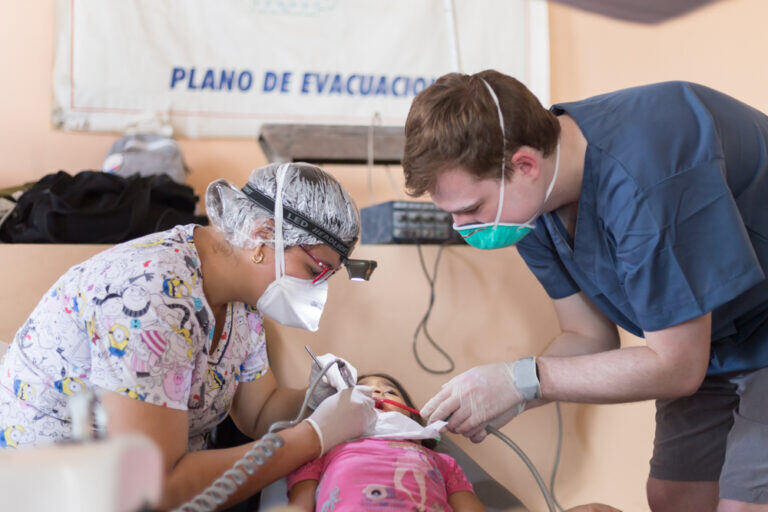
Some students also join a dental service learning trip to see how oral health care works in another country. On Smiles Movement trips, students shadow local dental professionals at mobile clinics and help with oral health education for children in partner communities. Students observe and support the team, and treatment stays with licensed local providers. Our post about working in a mobile clinic shows what a clinic day looks like.
How to choose a program that fits
A good volunteer role helps the community and helps you grow. Use these questions:
- Is there clear supervision? Someone should guide your tasks.
- Do tasks match your training? You should never be asked to work beyond your scope.
- Does it respect the community? Look for programs led by or partnered with local providers.
- Will you learn about prevention? Education is the core of hygiene work.
- Can you stay involved? Repeat involvement builds deeper skills and relationships.
Reflect on what you learn
After each experience, write a few notes. What did patients ask about? Which explanations worked? What surprised you? These notes help you see your growth. They also give you real examples for applications and interviews. For ideas on teaching kids, see our guide on building oral hygiene habits.
Start building your hygiene experience
Volunteering lets you test your interest in dental hygiene and practice explaining prevention. Begin with local options, choose supervised roles and reflect after each experience. If you want to learn how oral health education works in partner communities abroad, Smiles Movement can help you explore that path. Fill out the form or download our brochure to get more information about upcoming programs and trip dates.
Frequently asked questions about dental hygiene volunteer opportunities
Can students volunteer before starting a dental hygiene program?
Yes. Students can observe hygienists, help at health fairs and support oral health education. These roles do not involve clinical care.
Can licensed dental hygienists volunteer at free clinics?
Often, yes. Licensed hygienists can usually provide care within their scope at approved clinics. Check your state's rules and the clinic's requirements first.
What skills do dental hygiene volunteers build?
Volunteers build communication, patience and teamwork. They also learn how to explain prevention in simple words, which is central to hygiene work.