

Dental Terminology: A Beginner's Glossary for Students
The first time you shadow in a dental office, the conversation can sound like a new language. The dentist calls out numbers and surfaces. The assistant asks for tools you have never seen. Patients nod along to words you have only read in a textbook.
This guide to dental terminology gives you a head start. You will find the most common dental terms grouped by topic: tooth anatomy, everyday procedures, team roles and clinic vocabulary. Each term comes with a short, plain explanation. You will also learn simple ways to study these words so they stick. By the end, you will be able to follow more of what happens around you and ask better questions when you observe. You do not need to memorize everything at once. Start with the basics and build from there.
Dental terminology for tooth anatomy
Most dental conversations start with the tooth itself. These are the words you will hear most often.
- Crown: the part of the tooth you can see above the gums.
- Root: the part below the gumline that anchors the tooth in the jaw.
- Enamel: the hard outer layer of the crown. It is the hardest tissue in the body.
- Dentin: the layer under the enamel. It is softer and more sensitive.
- Pulp: the soft center of the tooth. It holds nerves and blood vessels.
- Gingiva: the clinical word for gums.
Tooth surfaces
Dentists describe where a problem is by naming the surface.
- Occlusal: the chewing surface of back teeth.
- Mesial: the side facing the middle of the mouth.
- Distal: the side facing away from the middle.
- Buccal: the side facing the cheek.
- Lingual: the side facing the tongue.
When you hear "MO," the dentist means the mesial and occlusal surfaces together. These short codes speed up charting.
Common procedure and condition terms
Once you know the anatomy, procedure names make more sense. Our guide to the most common dental procedures explains several of them in more detail.
Conditions
- Caries: the clinical term for tooth decay or cavities.
- Gingivitis: early gum inflammation. It often causes bleeding when brushing.
- Periodontitis: advanced gum disease that affects the bone around teeth.
- Plaque: a sticky film of bacteria on teeth.
- Calculus: hardened plaque, also called tartar.
Procedures
- Prophylaxis: a routine professional cleaning, often called a "prophy."
- Restoration: any treatment that repairs a tooth, such as a filling.
- Extraction: removing a tooth.
- Sealant: a thin coating placed on chewing surfaces to help prevent decay.
- Fluoride varnish: a protective coating painted on teeth.
- Radiograph: the formal word for a dental X-ray.
Team roles and everyday clinic words
A dental office runs on teamwork. Knowing who does what helps you understand the flow of the day.
- General dentist: provides most routine care for patients of all ages.
- Specialist: a dentist with extra training in one area, such as orthodontics or oral surgery. Our dental specialties guide covers each one.
- Dental hygienist: a licensed professional who cleans teeth and teaches prevention.
- Dental assistant: supports the dentist chairside and prepares rooms and instruments.
- Operatory: the treatment room where the patient sits.
- Chairside: working next to the patient during treatment.
- Sterilization area: where instruments are cleaned and sterilized.
- Charting: recording the condition of each tooth in the patient's record.
How to study dental terms
A few simple habits help new words stick:
- Group terms by topic. Learn anatomy first, then conditions, then procedures.
- Use flashcards. Put the term on one side and a plain definition on the other.
- Say the words out loud. Many dental terms come from Latin and Greek.
- Listen for them while shadowing. Write down new words and look them up later.
- Explain them to a friend. If you can explain a term simply, you understand it.
Practice in real settings
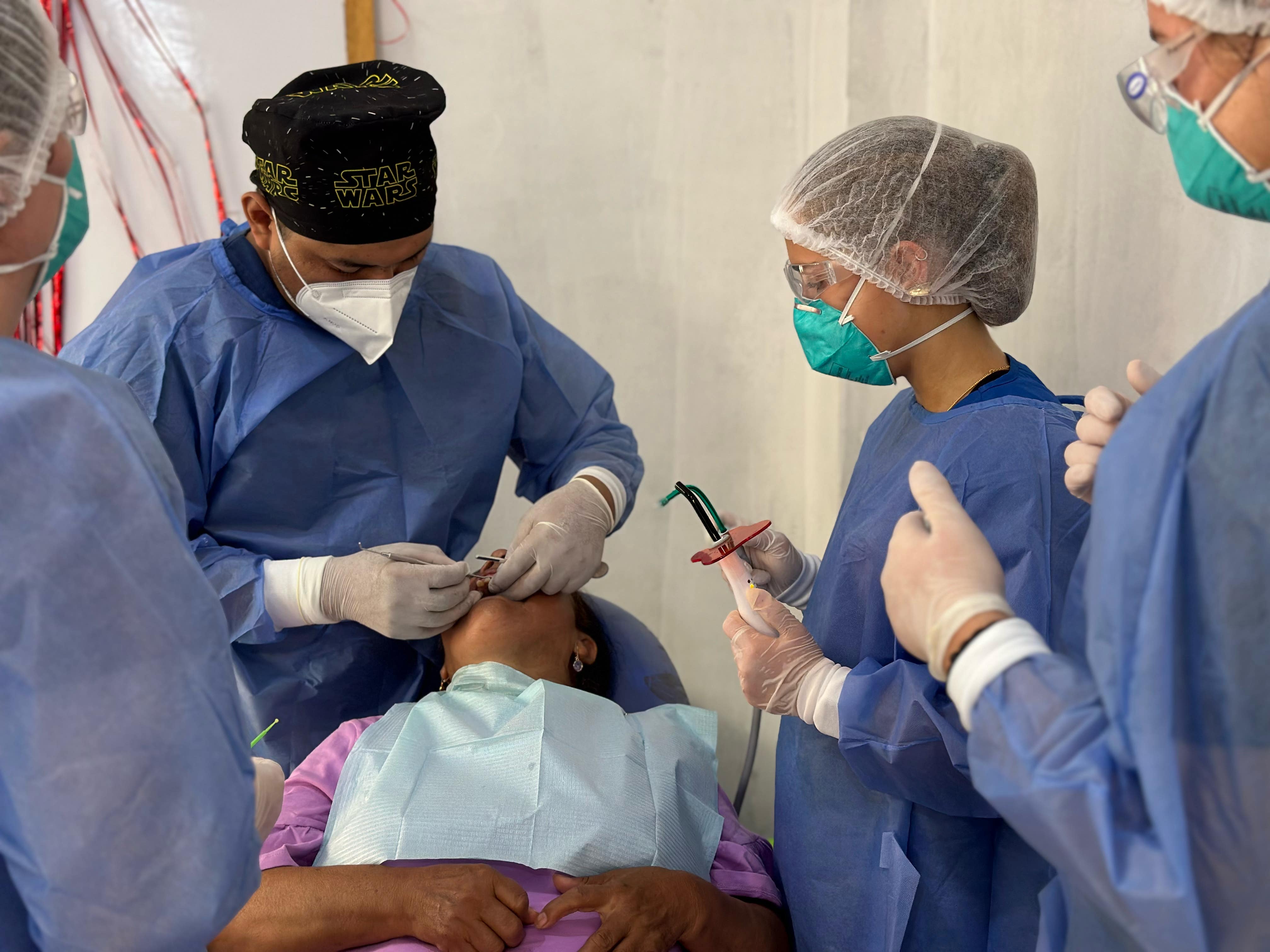
Hearing terms in context is the fastest way to learn them. Shadowing at a local office is a good start. In a mobile dental clinic, you will hear the same words used in a different setting. A dental service learning trip is another option. On Smiles Movement trips, students shadow local dental professionals at mobile clinics and help with oral health education for children in partner communities in Peru and Ecuador.
Build your dental vocabulary step by step
Learning dental terminology takes time, and that is normal. Each new word makes the next shadowing day easier to follow. It also helps you write clearer reflections and talk confidently about your experience later. If you want to hear these terms in a community clinic setting, Smiles Movement can help. Fill out the form or download our brochure to get more information about upcoming programs and trip dates.
Frequently asked questions about dental terminology
What are the most important dental terms for beginners?
Start with tooth anatomy: crown, root, enamel, dentin and pulp. Then learn the five tooth surfaces. Finally, add common condition terms like caries, plaque and gingivitis.
Why do dentists use terms like mesial and distal?
These terms describe exact locations on a tooth. They help the team chart findings quickly and clearly. Everyone reading the record knows the precise spot.
How can pre-dental students learn dental terminology faster?
Group terms by topic and review them with flashcards. Listen for the words while shadowing. Write down new terms and look them up the same day.