

Pre Med Volunteer Opportunities: How to Choose Well
If you are on a pre-health track, you have probably heard that volunteering matters. Then come the harder questions. Which roles count? How many hours do you need? Is one experience better than another?
This guide breaks down pre med volunteer opportunities in a practical way. The same ideas apply if you are pre-dental, pre-PA or still deciding. You will learn the difference between clinical and non-clinical service, where to find good roles and how to choose experiences you can sustain. You will also learn how to reflect on your service so you can describe it clearly in applications and interviews. The goal is a set of experiences that shows who you are and why you want to care for patients.
Clinical and non-clinical pre med volunteer opportunities
Most pre-health advisors group volunteering into two types. Both have value.
Clinical volunteering
Clinical roles put you near patients. You might help in a hospital, a free clinic or a hospice. Your tasks are usually simple, such as escorting patients, restocking rooms or keeping people company. You do not provide medical care. You do see how health teams work and how patients experience care.
Non-clinical volunteering
Non-clinical service happens outside a health setting. Examples include food banks, tutoring programs, shelters and community events. This work shows you care about people in many settings. It often brings you closer to the social factors that shape health, such as food access and housing. Those factors come up often in health careers. Understanding them early can make you a more thoughtful future provider.
Dental schools look for both types as well. For a deeper look at dental-specific options, read our guide on best volunteering for dental school.
Where pre-health students find good volunteer roles
Start with what is close to campus. Commuting less makes it easier to stay consistent. Check each site's training requirements before you apply, since some take weeks to complete.
- Hospitals and health systems. Most have a volunteer office with an application and training.
- Free and community clinics. These clinics serve patients with limited access to care. They often need reliable help.
- Hospice and long-term care. These roles teach patience and listening.
- Public health projects. Health fairs, vaccination events and education campaigns need volunteers.
- Campus organizations. Pre-health clubs often partner with local groups.
Service learning programs
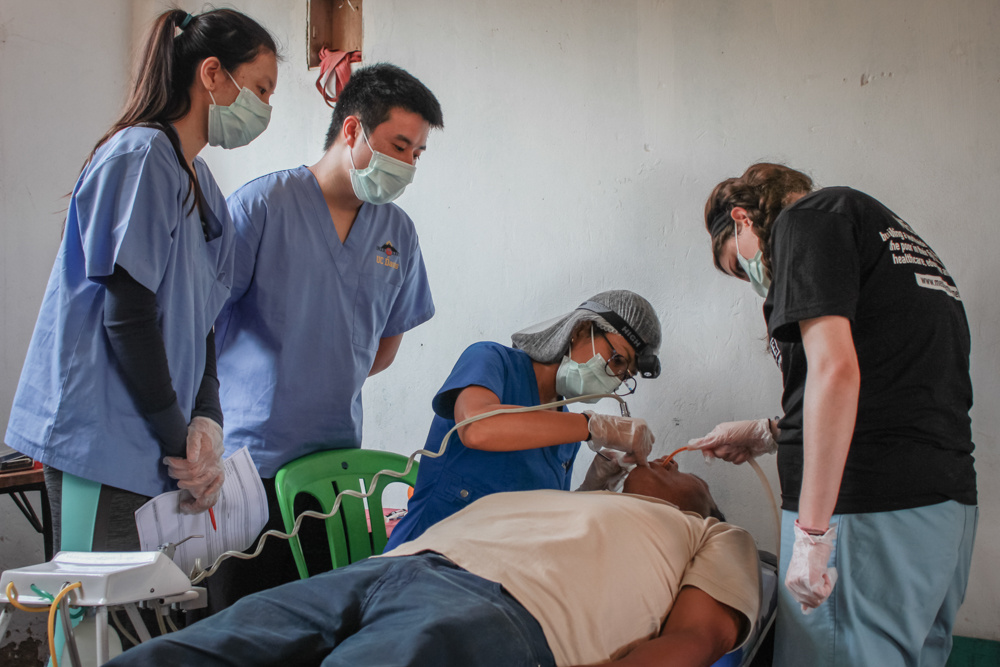
Service learning adds structured reflection to service. Some students choose a dental service learning trip to see care in a different health system. On Smiles Movement trips, students shadow local dental professionals at mobile clinics and help with oral health education for children in partner communities. Students observe and support the team. All treatment stays with licensed local providers. Our post on ethical service learning trips explains how to evaluate programs.
How to choose pre-health volunteering that fits you
More hours do not automatically make a stronger application. Depth and reflection matter too. Use these questions to choose:
- Can I commit for months? Long-term service shows reliability.
- Will I interact with people? Contact with patients or community members gives you stories to reflect on.
- Does it connect to my interests? If you are pre-dental, look for roles near oral health.
- Is the role ethical? You should never be asked to do tasks beyond your training.
- Can I grow in it? Some roles let you take on leadership over time.
Track and reflect as you go
Keep a log with dates, hours, tasks and a supervisor's contact. Add a short note after each shift about what you learned. These notes help when you write activity descriptions. They also help you answer interview questions with specific examples. Our guide on discussing volunteering in interviews shows how to turn those notes into strong answers.
Build experiences that show who you are
The best volunteer experiences match your interests and your schedule. Mix clinical and non-clinical roles. Stay with them long enough to learn. If you are exploring dentistry and want to see community care abroad, Smiles Movement offers guided programs for pre-health students. Fill out the form or download our brochure to get more information about upcoming programs and trip dates.
Frequently asked questions about pre med volunteer opportunities
What counts as clinical volunteering for pre-med students?
Clinical volunteering places you in a health setting near patients. Examples include hospitals, free clinics and hospice care. You support staff and patients without providing medical treatment.
Is non-clinical volunteering still important for pre-health students?
Yes. Non-clinical service shows commitment to your community. It also helps you understand factors that affect health, like food and housing.
Can pre-dental students use the same volunteer opportunities?
Yes. Most pre-health volunteer roles fit pre-dental students too. Add experiences related to oral health when you can, such as community dental clinics or oral health education.