

Early Childhood Caries: Causes and Prevention
Tooth decay can start as soon as a baby's first tooth appears. Many families are surprised by that. Baby teeth fall out eventually, so it is easy to assume their health matters less. In reality, those first teeth help children eat, speak and hold space for adult teeth.
Early childhood caries is the name dental professionals use for tooth decay in young children. In this guide, you will learn how it is defined, what causes it, and which prevention steps official health organizations recommend. If you are a pre-dental student, you will also see why this topic sits at the center of community oral health work. This article is general information. For advice about a specific child, talk with a dentist or pediatrician.
What is early childhood caries?
"Caries" is the clinical word for tooth decay. The American Academy of Pediatric Dentistry (AAPD) defines early childhood caries (ECC) as one or more decayed, missing (due to decay) or filled tooth surfaces in any primary tooth in a child under age six. Primary teeth are the first set, often called baby teeth.
The AAPD describes ECC as a chronic disease. It develops over time when risk factors outweigh protective ones. Risk factors include frequent sugary foods and drinks, bacteria in the mouth and limited access to fluoride. Protective factors include brushing with fluoride toothpaste, fluoride from water or varnish, and regular dental care.
Cavities in baby teeth are common. According to the CDC, more than half of children aged 6 to 8 have had a cavity in at least one baby tooth. That figure comes from national surveys that ran through 2011–2016.
Why it matters beyond the mouth
Untreated decay can cause pain and infection. Pain can make it hard for a child to eat, sleep or focus in school. Our article on poor water quality and decay shows how living conditions can raise a community's risk.
How families and dental teams prevent early childhood caries
Prevention works best when several habits support each other. Official guidance points to a few key steps.
Start dental care early
The AAPD recommends establishing a "dental home" within six months of the first tooth and no later than 12 months of age. A dental home is an ongoing relationship with a dentist who knows the child. The ADA's MouthHealthy site also advises a first visit after the first tooth appears and no later than the first birthday.
Use fluoride wisely
Fluoride helps strengthen tooth enamel. The CDC recommends brushing twice a day with fluoride toothpaste and checking with a doctor or dentist first for children under 2. The CDC also notes that fluoride varnish, a coating painted on teeth by a trained professional, can prevent about one-third of cavities in baby teeth. Drinking tap water with fluoride helps too.
Watch sugar and drinking habits
The AAPD policy recommends avoiding foods and drinks with added sugars for children under 2. It also advises against frequent sugary snacks and against putting a child to bed with a bottle. For children aged 1 to 3, it suggests limiting 100% juice to no more than 4 ounces a day.
Build daily habits
Brushing is easier when it feels routine and positive. Our guide on getting kids to brush shares practical ideas for families.
Early childhood caries and community oral health
ECC is closely tied to access. Families who live far from a dentist, lack coverage or have limited time off work face more barriers to prevention. That is why community programs focus on education, fluoride and early screenings.
For pre-dental students, this is a useful topic to understand before dental school. It connects clinical care with public health, nutrition and family routines. Our article on preventative dental care explores why prevention matters so much in underserved communities.
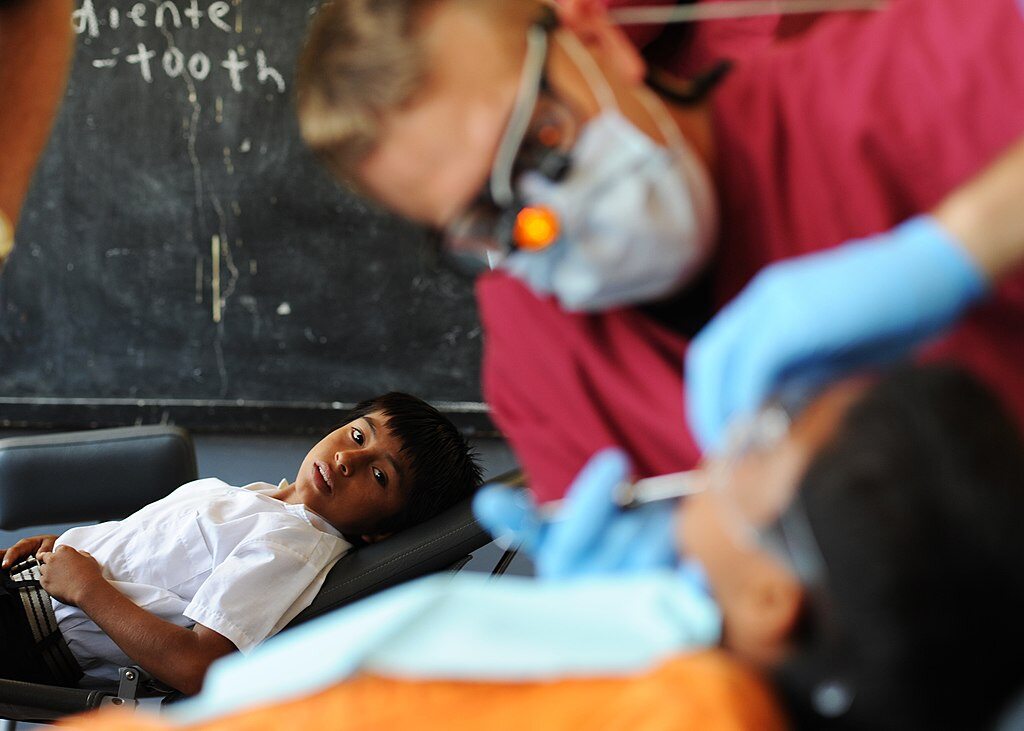
Seeing prevention in action can make these ideas concrete. On a dental service learning trip, students shadow local dental professionals at mobile clinics and help with oral health education for children in partner communities. Licensed professionals provide all patient care.
Learn how prevention works in real communities
Early childhood caries is common, and much of it can be prevented with early care, fluoride and daily habits. If you want to see community oral health work alongside dental professionals, Smiles Movement can help. Fill out the form or download our brochure to get more information about upcoming programs and trip dates.
Frequently asked questions about early childhood caries
What age does early childhood caries affect?
The AAPD uses the term for tooth decay in any baby tooth in a child under age six.
When should a child first see a dentist?
The AAPD and the ADA recommend a first dental visit after the first tooth appears and no later than the first birthday.
Can early childhood caries be prevented?
Much of it can. Official guidance points to fluoride toothpaste, fluoride varnish, fluoridated water, limits on added sugar and early dental visits. A dentist or pediatrician can advise on a specific child.